My holidays didn't go quite as planned, something I may or may not talk about more here. But the net result is that I didn't read half as many books as I'd planned, and that I still can't really focus on any book for any length of time.
What I did read:
28 Speaking with the Angel - various authors (edited by Nick Hornby)
29 Turks Fruit (Turkish Delight) - Jan Wolkers
30 Tongkat - Peter Verhelst
31 Het Exacte Verhaal - Ionica Smeets
Not really my typical month: 2 books in Dutch, one informal book about scientific journalism, and one short story collection. I'm nearly finished with The Bone Clocks by David Mitchell (I always seem to be 'nearly finished' with something at the end of a month, I really should plan these things better), but nearly isn't the real thing, so this will have to be one of the weirdest months with respect to books as well.
The short stories were nice, but nothing special, although it did contain a story by Colin Firth (followed by a story by Helen Fielding, which is a nice touch). Turkish Delight is one of those Dutch classics anyone should really read; I liked it, and I will now have to read more by Jan Wolkers. Tongkat is a beautiful fantasy story, although you can't really call it a story because it is more poetic than that, in beautiful Flemish Dutch. I will have to reread that one, because I feel like I've only scratched the surface of its complexity, but that will have to wait until 2016. Het Exacte Verhaal explains why scientists should engage in scientific journalism, and how. It's a fun read, especially if you have biologists and other scientists writing schoolbooks, but it caters to a niche market.
So, I won't be all optimistic about how things will be better in september, because I don't think they will, but we'll see how it goes.
Monday, 31 August 2015

Friday, 31 July 2015
52 book challenge - July
So I'm back from London, the City that... has a lot of rain? It doesn't really have a snappy nickname, like The Big Apple or The City of Lights. Apparently, the most-used nickname is "The Big Smoke", which may or may not be very apt, as I couldn't really see any smoke through all the rain.
Anyway, we spent a lot of time in museums, and not a lot of time reading, so my book list didn't really grow that much during this particular holiday. I'll have to make that up during our camping trip to France in the coming weeks.
The standings are as follows:
24 The Talented Mr Ripley - Patricia Highsmith
25 Starter for Ten - David Nicholls
26 Tinker Tailor Soldier Spy - John le Carre
27 De Aanslag (The Assault) - Harry Mulisch
I am nearly finished with Speaking with the Angel, a short story collection by Nick Hornby, but I don't think I'll finish that this month. But, still, I'm more than halfway! And today's week number is 31, so I'm still just four books behind, which I can easily catch up on.
Some varied reading this month. The Talented Mr Ripley should probably be seen as a classic, as it is from 1955 and hasn't really been out of print since. I hadn't read any Ripley novels before and fell asleep during the film, but the story gripped me. I'm not really into crime novels, but this one had a nice psychological edge to it that made it interesting. Also, part of it takes place in Venice, which seems to be a favourite place for lots of literary characters these days (the protagonists of Us and The Discovery of Heaven also find themselves in Venice at some point).
Starter for Ten is something completely different, but one of my favourite books of those I've read so far this year. I'm a big fan of University Challenge and had already seen the film (with James McAvoy! And Benedict Cumberbatch! And they're so young!), so I was familiar with the plot, but Nicholls writing style is just the best. It is a very comical story, but has a very serious class-conscious undertone that comes out better in the novel.
Another novel I'd already seen the film of was Tinker Tailor Soldier Spy, my second John le Carre novel. Now I didn't really understand or follow the film properly, so I was counting on le Carre's beautiful writing style (as discovered in The Spy Who Came in From the Cold), and it was another gem. The first few chapters leave you utterly confused, as he starts in the middle of everything and doesn't explain who people are or where they are or what they are doing or why, but slowly you get to discover all the pieces and put them together. It's written like the puzzle George Smiley has to construct: who is the mole hiding in the British secret service? Somehow you do figure it out just slightly ahead of Smiley, so you can feel a bit smug about yourself even while you are wondering how you ever got there.
And finally I read one of the great Dutch classics, The Assault, by Harry Mulisch. I couldn't really get through his The Discovery of Heaven, but The Assault is much thinner and much better written. I won't give away too much, but it's about the Second World War and it's kind of another puzzle, only this time, the protagonist doesn't really want to solve it, he just sort of gets pulled in. Most of my classmates read this book in secondary school, but I was trying to be anti-snob by not reading any novels by Mulisch or his famous contemporaries. Which leaves me in the happy position of being able to discover and read them, and probably appreciate them better, now.
So, just one more week, and then we're off to the south of France to do some camping, and a looot of catch-up reading!
Anyway, we spent a lot of time in museums, and not a lot of time reading, so my book list didn't really grow that much during this particular holiday. I'll have to make that up during our camping trip to France in the coming weeks.
The standings are as follows:
24 The Talented Mr Ripley - Patricia Highsmith
25 Starter for Ten - David Nicholls
26 Tinker Tailor Soldier Spy - John le Carre
27 De Aanslag (The Assault) - Harry Mulisch
I am nearly finished with Speaking with the Angel, a short story collection by Nick Hornby, but I don't think I'll finish that this month. But, still, I'm more than halfway! And today's week number is 31, so I'm still just four books behind, which I can easily catch up on.
Some varied reading this month. The Talented Mr Ripley should probably be seen as a classic, as it is from 1955 and hasn't really been out of print since. I hadn't read any Ripley novels before and fell asleep during the film, but the story gripped me. I'm not really into crime novels, but this one had a nice psychological edge to it that made it interesting. Also, part of it takes place in Venice, which seems to be a favourite place for lots of literary characters these days (the protagonists of Us and The Discovery of Heaven also find themselves in Venice at some point).
Starter for Ten is something completely different, but one of my favourite books of those I've read so far this year. I'm a big fan of University Challenge and had already seen the film (with James McAvoy! And Benedict Cumberbatch! And they're so young!), so I was familiar with the plot, but Nicholls writing style is just the best. It is a very comical story, but has a very serious class-conscious undertone that comes out better in the novel.
Another novel I'd already seen the film of was Tinker Tailor Soldier Spy, my second John le Carre novel. Now I didn't really understand or follow the film properly, so I was counting on le Carre's beautiful writing style (as discovered in The Spy Who Came in From the Cold), and it was another gem. The first few chapters leave you utterly confused, as he starts in the middle of everything and doesn't explain who people are or where they are or what they are doing or why, but slowly you get to discover all the pieces and put them together. It's written like the puzzle George Smiley has to construct: who is the mole hiding in the British secret service? Somehow you do figure it out just slightly ahead of Smiley, so you can feel a bit smug about yourself even while you are wondering how you ever got there.
And finally I read one of the great Dutch classics, The Assault, by Harry Mulisch. I couldn't really get through his The Discovery of Heaven, but The Assault is much thinner and much better written. I won't give away too much, but it's about the Second World War and it's kind of another puzzle, only this time, the protagonist doesn't really want to solve it, he just sort of gets pulled in. Most of my classmates read this book in secondary school, but I was trying to be anti-snob by not reading any novels by Mulisch or his famous contemporaries. Which leaves me in the happy position of being able to discover and read them, and probably appreciate them better, now.
So, just one more week, and then we're off to the south of France to do some camping, and a looot of catch-up reading!
Thursday, 23 July 2015
London calling
And if the point I made in my last post needed any more proof: I know that there is a song called London Calling, I think I even know the melody, but I couldn't tell you for sure who it's by if my life depended on it. I would probably have said The Police, which a short Google action told me is very wrong, although at least I was in the right decade (it's by The Clash, for those other non-music knowers).
Anyway, to get to the point of this post; I'm flying to London this afternoon, to spend a long city trip weekend there with a friend. The great thing about this is that we share a lot of the same interests, so we want to visit the same places (with biggest bookshop in Europe highest on our list). Even though the weather is going to be typical English downpours, we'll be entertaining ourselves in Westminster Abbey, the National Gallery, the British Museum, the Museum of Natural History, and all those other great (and indoor) places. And we'll be seeing Richard II at the Globe, very probably while getting thoroughly soaked in the rain, but who cares.
The interesting thing about this will be that the maximum amount of time we've spent in each other's company up until now is about twelve hours, so we'll see how much we still like each other after five whole days. I think it's going to be okay, but you never know; being too much alike can also backfire.
We're flying from Groningen Airport, which is one of the smallest in the Netherlands, with a (cheap, Belgian) company I'd never heard of until I booked the tickets, so we'll also see how that goes. I tried checking in online yesterday, but the thing flat out refused me, so I hope the airport staff will be able to help us out. Also, we're not landing anywhere near London, but in Southend, and will then take a train to the capital.
It all kinda feels like backpacking again; not being able to arrange your stuff through the Internet, relying on unknown public transport after landing, staying in a hostel... To quote the Hobbit film reference: we're going on an adventure!
Anyway, to get to the point of this post; I'm flying to London this afternoon, to spend a long city trip weekend there with a friend. The great thing about this is that we share a lot of the same interests, so we want to visit the same places (with biggest bookshop in Europe highest on our list). Even though the weather is going to be typical English downpours, we'll be entertaining ourselves in Westminster Abbey, the National Gallery, the British Museum, the Museum of Natural History, and all those other great (and indoor) places. And we'll be seeing Richard II at the Globe, very probably while getting thoroughly soaked in the rain, but who cares.
The interesting thing about this will be that the maximum amount of time we've spent in each other's company up until now is about twelve hours, so we'll see how much we still like each other after five whole days. I think it's going to be okay, but you never know; being too much alike can also backfire.
We're flying from Groningen Airport, which is one of the smallest in the Netherlands, with a (cheap, Belgian) company I'd never heard of until I booked the tickets, so we'll also see how that goes. I tried checking in online yesterday, but the thing flat out refused me, so I hope the airport staff will be able to help us out. Also, we're not landing anywhere near London, but in Southend, and will then take a train to the capital.
It all kinda feels like backpacking again; not being able to arrange your stuff through the Internet, relying on unknown public transport after landing, staying in a hostel... To quote the Hobbit film reference: we're going on an adventure!
Wednesday, 15 July 2015
Spotify
I am usually not one of those ‘early
adopters’, who jump onto a technological bandwagon just as it’s taking off. I
didn’t get a smartphone until most people around me were already on their
second or third. When everybody was starting to get into digital photography, I
got another analogue camera. And I still like to write most things by hand,
instead of using my phone, computer or tablet.
So it may not come as a surprise
that I didn’t discover Spotify until February this year, when enough people had
bugged me about it (and enough colleagues were happily immersed in their music
while working). Until then, I’d been adding specific music files to my
smartphone, and playing that selection randomly through the general Samsung
music app. But with Spotify, the possibilities were endless!
It reminded me of using Rhythmbox
(for Linux) on my computer; all the music I could ever need, neatly organized
by artist or album, or just one long list I could put on shuffle. Only without
the fuss of having to tag the songs properly (yes, I am one of those neat
freaks who has to remove the masses of underscores or “XOXO from Juan in Brazil”
comments, and put in the right numbers, titles and genres, including proper
capitalization). Not all the music I want is on there (no The Beatles, for
example), but then again I couldn’t (illegally) download all the music I wanted
to, so no big difference there.
So I’ve added all my regular
artists, who I’ve listened to and loved for many years now, including Counting
Crows, Goo Goo Dolls, Train, Alanis Morissette, and some other nice 90s
flashbacks such as Lifehouse, Krezip, Robbie Williams and Blink 182. To which I
added some film soundtracks (Amelie, 500 Days of Summer) and some separate
numbers that I cherish (Solisbury Hill by Peter Gabriel, for example). And that
was mostly that. Apart from leeching on those more musically knowledgeable friends
who actually put together playlists, that is. And stealing lone numbers from
those playlists, and adding those to my growing collection of songs to be
played in shuffle mode.
But the whole idea of Spotify, or
that’s how it was sold to me, is that you discover new music. Whenever you
click on an artist, Spotify tells you about similar artists, who make similar
music. Which is how you discover new bands you like, and new songs, and broaden
your musical horizon.
Only it doesn’t really work that way
for me. One reason, probably, is that I have absolutely no memory for song or
band names. There are very few songs I can name from memory, and even with most
Counting Crows songs I have to wait for the chorus to start before I’m completely
sure what the title is, even though I’ve probably heard that song about 200
times. I can’t recognize most artists, and often have to use the music
recognition app on my phone to be sure who’s playing on the radio. When people
mention songs or artists to me, or I hear a song on the radio and like it, I
won’t remember any of that. So when Spotify tells me that Counting Crows are
very similar to The Wallflowers, I won’t remember that band name in a couple of
minutes, or recognize them as the group that has a song that I actually really
like. Somehow this capability for musical knowledge must have skipped a generation,
because my dad is actually very good with music.
Another thing, having all those
other artists recommended to me makes me feel like my very special and unique
taste in music, carefully developed and maintained, isn’t really that special
or original at all, because there are many other bands out there who do exactly
the same thing, and if I’d stumbled upon them first, they’d be on my
most-played list. And while I know that there is nothing original or special
about my taste in music, I still like to live in that illusion.
And finally, of course, the familiar
things are the easiest. The songs that you’ve known for years, the memories
attached to those songs, the lyrics you can sing (mime, while at work) along
with word-for-word; that feels more comfortable than searching and trying and
rejecting.
So apparently, when it comes to
music, it’s the same for me as with technology. I like the comfortable,
familiar things, and won’t go out on a limb to get the newest or hippest thing
first. I don’t mind that I don’t know about the hottest song of the moment, or
discover that up-and-coming artist before any of my friends. When something new
comes along, I will try it tentatively, and when it feels right and fits into
my routines, I will gradually add it to my routine. The same way Spotify found
its way into my life, some of the new songs and artists will also gradually
find a place on my shuffle list. And by the time I’m fully adapted and in tune,
there will be another new hip way to listen to music, and I’ll find my way
there in due time…
Monday, 13 July 2015
Echoes from a blogging past
So I was just uploading a whole bunch of my old stories (and by old I mean really really old, like stuff I wrote in Windows 95 when I was about 12) to Google Drive, because I want to be sure they will still be somewhere, even when my laptop and external hard disk both die in a fire, and then I was thinking about all the other things I've written long ago, and that made me think of my old blog. At which point I realised, that I didn't even know the exact URL anymore. Which is kinda horrible, for something that I wrote stuff on from 2005 to 2011. Luckily, when you google my full name, it´s the seventh or eighth hit, so Google came in handy there too. If I were still writing my old blog, I´d now be going on about the fact that the verb ´to google´ is written with a lowercase letter, whereas the company name is still with a capital letter, but that´s neither here nor there.
So I spent some time reading through some of the old posts (the newer-old ones, aka the most recent ones), and myyy, I had a lot of opinions. I mean, I have a lot of opinions on this blog, but they are mostly about books or films or stuff that only affects me personally. But while I was still a student of English, I had some very strong opinions about teachers, the content of courses, the running of the whole thing, the university, the educational budget, and what not. This may not come as a surprise, since I actually was vice-president of the programme committee, but still. Case in point is the letter that I sent in to (and was printed in) a newspaper about a community college in the Netherlands that had to withdraw a lot of diplomas because their courses and examination weren't up to scratch. I put the letter on my blog, and it generated a lot of comment (also on Facebook), including a contribution from one of the high-ranking people in the college who accused me of 'listening only to the media'. I never okayed that one to go online, because I felt it was kind awkward, but it does show how opinionated I was. While at that time, I probably thought I was being very mellow and polite and grown-up. Which is also what I'm thinking about the stuff that I write now, so in five year's time I'll have another cringe moment as I read back the stuff I write now.
Some other interesting stuff, the tags I used are mostly similar to the ones here; creative, cats, literature, postcrossing, random, rant (mostly about my housemates), writings (schrijfsels, in Dutch, I love that word), study, language, garden, home, free time, work. Guess I haven't changed that much.
But the really ironic one was part of this post from 2011, in which I outline our my sort-of new year's resolutions. The list is as follows (translation below):
- Fons en ik vinden een leuk huisje met meer ruimte en minder irritante buren
- Ik haal mijn BA Engels en begin aan mijn MA Engels
- Fons haalt zijn MSc en vindt een leuke baan
- Ik schrijf daadwerkelijk iets waarvan ik vind dat anderen het ook mogen lezen
- We vervolgen onze reis in wat ambitieuzer en creatiever koken
- We hebben meer tijd voor gezelligheid en een sociaal leven en minder gestress en drukte
- Fons and I find a nice little home with more space and less annoying neighbours
- I will get my BA English and start my MA English
- Fons will get his MSc and find a nice job
- I actually write something that I think others may also read
- We continue our journey into cooking more ambitiously and creatively
- We have more time for a nice social life and less stress and hectics (some words are just untranslatable)
Soooo. How many of those do we recognise for this year? I'd say at least 4. Although we do live in a lot bigger house, we still have annoying neighbours, and are looking for a new place to live. I still haven't written something that I think other people should read (doesn't mean I don't let anybody read my stuff, but it's still reluctantly). We're now using the HelloFresh food box to cook more adventurously, but it's not really what we'd like, because (point 4) we're still too busy to make the proper time for a social life and cooking and all those other things we want to do. So apart from both graduating and finding jobs, things actually haven't changed that much.
One thing I do miss; while I wrote my old blog, I was still learning loads of new stuff every day, and I wrote about that a lot. It may be the hereditary teacher hiding somewhere deep inside me, but when I found out about some new cool literary or other thing, I immediately felt the need to share it with the whole world. Also, a looot of poetry. I never knew I read and commented on that much poetry. Also, lots of links to other people's blogs and stories, when I still had the time to read those. I miss that. I will try to do more of that here.
So, after all that meta-talk, you must be pretty curious about the blog itself. Small catch: it's in Dutch. Surprisingly good Dutch, if I may say so myself; reading things back I never expected to actually write well in my mother language (no idea why, incidentally), but some of the posts are actually quite good. Yes, I'm as surprised as you are.
Because reading the blog isn't of any interest to those who can't read Dutch, I'll switch languages now, and I'll see the rest of you in another post.
Dusss, de link. Bij deze: sherco.livejournal.com. Mocht je weinig tijd hebben, maar wel iets vermakelijks willen lezen, dan misschien iets lichts als 'Waar ken je die man toch van...?' een fijne frustratie-post als 'Een frisse start', of het diep-ironische 'Carriere maken', waarin ik me druk maak over allerhande studiegenoten die ineens carriere willen maken, terwijl ik zelf uiteindelijk al een fancy baan had voordat ik uberhaupt afgestudeerd was. Of al die andere leuke mijlpalen in mijn leven, zoals toen ik Darwin en Vrutsel uit het asiel haalde (Vrutsel ligt op m'n schoot te spinnen), of toen ik besloot om te stoppen met biologie en het roer om te gooien, en alles helemaal anders werd. Misschien vooral leuk en nostalgisch voor mezelf en zij die erbij waren, maar ik wil het jullie natuurlijk niet onthouden. Ik ben echt oud geworden, ik word er nostalgisch van...
So I spent some time reading through some of the old posts (the newer-old ones, aka the most recent ones), and myyy, I had a lot of opinions. I mean, I have a lot of opinions on this blog, but they are mostly about books or films or stuff that only affects me personally. But while I was still a student of English, I had some very strong opinions about teachers, the content of courses, the running of the whole thing, the university, the educational budget, and what not. This may not come as a surprise, since I actually was vice-president of the programme committee, but still. Case in point is the letter that I sent in to (and was printed in) a newspaper about a community college in the Netherlands that had to withdraw a lot of diplomas because their courses and examination weren't up to scratch. I put the letter on my blog, and it generated a lot of comment (also on Facebook), including a contribution from one of the high-ranking people in the college who accused me of 'listening only to the media'. I never okayed that one to go online, because I felt it was kind awkward, but it does show how opinionated I was. While at that time, I probably thought I was being very mellow and polite and grown-up. Which is also what I'm thinking about the stuff that I write now, so in five year's time I'll have another cringe moment as I read back the stuff I write now.
Some other interesting stuff, the tags I used are mostly similar to the ones here; creative, cats, literature, postcrossing, random, rant (mostly about my housemates), writings (schrijfsels, in Dutch, I love that word), study, language, garden, home, free time, work. Guess I haven't changed that much.
But the really ironic one was part of this post from 2011, in which I outline our my sort-of new year's resolutions. The list is as follows (translation below):
- Fons en ik vinden een leuk huisje met meer ruimte en minder irritante buren
- Ik haal mijn BA Engels en begin aan mijn MA Engels
- Fons haalt zijn MSc en vindt een leuke baan
- Ik schrijf daadwerkelijk iets waarvan ik vind dat anderen het ook mogen lezen
- We vervolgen onze reis in wat ambitieuzer en creatiever koken
- We hebben meer tijd voor gezelligheid en een sociaal leven en minder gestress en drukte
- Fons and I find a nice little home with more space and less annoying neighbours
- I will get my BA English and start my MA English
- Fons will get his MSc and find a nice job
- I actually write something that I think others may also read
- We continue our journey into cooking more ambitiously and creatively
- We have more time for a nice social life and less stress and hectics (some words are just untranslatable)
Soooo. How many of those do we recognise for this year? I'd say at least 4. Although we do live in a lot bigger house, we still have annoying neighbours, and are looking for a new place to live. I still haven't written something that I think other people should read (doesn't mean I don't let anybody read my stuff, but it's still reluctantly). We're now using the HelloFresh food box to cook more adventurously, but it's not really what we'd like, because (point 4) we're still too busy to make the proper time for a social life and cooking and all those other things we want to do. So apart from both graduating and finding jobs, things actually haven't changed that much.
One thing I do miss; while I wrote my old blog, I was still learning loads of new stuff every day, and I wrote about that a lot. It may be the hereditary teacher hiding somewhere deep inside me, but when I found out about some new cool literary or other thing, I immediately felt the need to share it with the whole world. Also, a looot of poetry. I never knew I read and commented on that much poetry. Also, lots of links to other people's blogs and stories, when I still had the time to read those. I miss that. I will try to do more of that here.
So, after all that meta-talk, you must be pretty curious about the blog itself. Small catch: it's in Dutch. Surprisingly good Dutch, if I may say so myself; reading things back I never expected to actually write well in my mother language (no idea why, incidentally), but some of the posts are actually quite good. Yes, I'm as surprised as you are.
Because reading the blog isn't of any interest to those who can't read Dutch, I'll switch languages now, and I'll see the rest of you in another post.
Dusss, de link. Bij deze: sherco.livejournal.com. Mocht je weinig tijd hebben, maar wel iets vermakelijks willen lezen, dan misschien iets lichts als 'Waar ken je die man toch van...?' een fijne frustratie-post als 'Een frisse start', of het diep-ironische 'Carriere maken', waarin ik me druk maak over allerhande studiegenoten die ineens carriere willen maken, terwijl ik zelf uiteindelijk al een fancy baan had voordat ik uberhaupt afgestudeerd was. Of al die andere leuke mijlpalen in mijn leven, zoals toen ik Darwin en Vrutsel uit het asiel haalde (Vrutsel ligt op m'n schoot te spinnen), of toen ik besloot om te stoppen met biologie en het roer om te gooien, en alles helemaal anders werd. Misschien vooral leuk en nostalgisch voor mezelf en zij die erbij waren, maar ik wil het jullie natuurlijk niet onthouden. Ik ben echt oud geworden, ik word er nostalgisch van...
Sunday, 5 July 2015
Jamming
So we're having a loooot of strawberries in our garden this year, so much even, that we decided to make strawberry jam. I hardly ever eat jam, actually only at high teas (with scones) or when we're staying in a hotel that doesn't have any other bread spread things for breakfast. My SO does eat a lot of jam, in very varying tastes, usually provided by his father, who also has lots of fruit in his garden. But for our first try, we decided to make just plain old strawberry jam.
So we saved up the strawberries from several days, even the slightly slug-eaten ones that we'd usually throw out, and then we weighed them all and turned them into jam. We had about 800 g of strawberries in total, which is quite a nice harvest. It took a while to clean and slice them all, getting rid of the dirty and partly-eaten bits, and then we put them in a pan to heat up.
Then we added what is called 'jelly sugar' in Dutch, I have absolutely no idea what it's called in the rest of the world, but it's the sugar that you put in to make jam. Usually you add the same amount of sugar as you have fruit, but with this sugar we had to add less, so that took a bit of calculating. We also added a big squeeze of lemon and lime juice, because just strawberries and sugar is way too sweet.
After boiling it all for a while, the jam was transferred to the jars, with some big strawberry pieces still in there. You can boil it down for longer and get a really smooth jam, but a bit of texture is nice to have. These pieces do mean that you get jelly in the bottom and more strawberry pieces at the top, because they float on the more liquid part, but that does make it look kinda nice.
Then it was a case of putting on the lids and letting them cool, until we could put them in the fridge. The lids of our new special strawberry jam jars didn't fit quite as well as we'd hoped, so we're going to have to eat those a bit quicker than we thought, but I don't imagine that's going to be a problem. We tasted the jam when it went into the jars, and it's really nice, sweet but not to clingy, with a nice sour note. As I said, I'm not really much of a jam-eater, but of course I'll try our own home-made jam when I get the chance.
We still have loads of strawberries in the garden, some of which are still green and some of which are just becoming red, so we'll be eating 'normal' strawberries (maybe with cream) for a couple of days as well. But this was a very nice home-grown food experience already!
So we saved up the strawberries from several days, even the slightly slug-eaten ones that we'd usually throw out, and then we weighed them all and turned them into jam. We had about 800 g of strawberries in total, which is quite a nice harvest. It took a while to clean and slice them all, getting rid of the dirty and partly-eaten bits, and then we put them in a pan to heat up.
 |
| Strawberry pan. |
Then we added what is called 'jelly sugar' in Dutch, I have absolutely no idea what it's called in the rest of the world, but it's the sugar that you put in to make jam. Usually you add the same amount of sugar as you have fruit, but with this sugar we had to add less, so that took a bit of calculating. We also added a big squeeze of lemon and lime juice, because just strawberries and sugar is way too sweet.
After boiling it all for a while, the jam was transferred to the jars, with some big strawberry pieces still in there. You can boil it down for longer and get a really smooth jam, but a bit of texture is nice to have. These pieces do mean that you get jelly in the bottom and more strawberry pieces at the top, because they float on the more liquid part, but that does make it look kinda nice.
 |
| Blurry jam transfer. |
 |
| Split-level strawberry jam. |
Then it was a case of putting on the lids and letting them cool, until we could put them in the fridge. The lids of our new special strawberry jam jars didn't fit quite as well as we'd hoped, so we're going to have to eat those a bit quicker than we thought, but I don't imagine that's going to be a problem. We tasted the jam when it went into the jars, and it's really nice, sweet but not to clingy, with a nice sour note. As I said, I'm not really much of a jam-eater, but of course I'll try our own home-made jam when I get the chance.
We still have loads of strawberries in the garden, some of which are still green and some of which are just becoming red, so we'll be eating 'normal' strawberries (maybe with cream) for a couple of days as well. But this was a very nice home-grown food experience already!
Tuesday, 30 June 2015
52 books challenge - June
Wow, is this year going faster than other years, or what? I feel like May has just begun (I've just come back from China), and suddenly it's almost July already! We're bracing ourselves for some of the hottest days to come this year (30+ temperatures, the whole country is in an uproar) and in the meantime I even managed to read some books!
19 De vegetarier (The Vegetarian) - Han Kang
20 The assassination of Margaret Thatcher - Hilary Mantel
21 Us - David Nicholls
22 Black Swan Green - David Mitchell
23 Gooseberries - Anton Chekov
I alllmost managed to finish The Talented Mr Ripley as well, but then sleep overtook me, so that will have to go in next month's list.
But considering that the last full week of June was last week (week 26), and I'm now at 23 books, I seem to have actually caught up by one book! I am now only 3 books behind!
So I read some wildly differing books this month. The Vegetarian is by a South Korean writer who I'd never heard of, and it is a very beautiful but also slightly disturbing book about a woman who decides to stop eating meat, and the events that unravel because of that choice. It makes you wonder whether anyone is actually in their right mind at any time. I feel that Us is this years The Rosie Project: the book about a scientifically minded man (first-person narrator) who falls in love with this artsy girl but can't quite get the affection across because of his slightly autistic nature. Only in Us, the couple are actually married (much to the surprise of the protagonist) and their marriage is falling apart. Also, Us has a wonderful sense of humour, which makes me want to read more books by Nicholls. Then there was Gooseberries, short stories by Chekov, to complement the short stories by Hilary Mantel. And finally Black Swan Green, of which I've written a lot already.
Hopefully the approaching summer weather will mean lots of lazy afternoons filled with reading and eating home-grown strawberries...
19 De vegetarier (The Vegetarian) - Han Kang
20 The assassination of Margaret Thatcher - Hilary Mantel
21 Us - David Nicholls
22 Black Swan Green - David Mitchell
23 Gooseberries - Anton Chekov
I alllmost managed to finish The Talented Mr Ripley as well, but then sleep overtook me, so that will have to go in next month's list.
But considering that the last full week of June was last week (week 26), and I'm now at 23 books, I seem to have actually caught up by one book! I am now only 3 books behind!
So I read some wildly differing books this month. The Vegetarian is by a South Korean writer who I'd never heard of, and it is a very beautiful but also slightly disturbing book about a woman who decides to stop eating meat, and the events that unravel because of that choice. It makes you wonder whether anyone is actually in their right mind at any time. I feel that Us is this years The Rosie Project: the book about a scientifically minded man (first-person narrator) who falls in love with this artsy girl but can't quite get the affection across because of his slightly autistic nature. Only in Us, the couple are actually married (much to the surprise of the protagonist) and their marriage is falling apart. Also, Us has a wonderful sense of humour, which makes me want to read more books by Nicholls. Then there was Gooseberries, short stories by Chekov, to complement the short stories by Hilary Mantel. And finally Black Swan Green, of which I've written a lot already.
Hopefully the approaching summer weather will mean lots of lazy afternoons filled with reading and eating home-grown strawberries...
Sunday, 28 June 2015
Black Swan Green
So I've been reading quite a lot to keep up with my 52 Book Challenge, and one of the books I've recently read was Black Swan Green by David Michell. Now I may not have written all that much about him here, but David Mitchell (not to be confused with the comedian of the same name) is one of my favourite authors.
As with most of my favourite authors, I first read his most well-known novel, Cloud Atlas, because you have to start somewhere, and if lots of people are saying a book is great, you start to believe them. And it is great, beautifully written, very intricate, with seven different 'layers' of story all interweaving into one big saga. Most people know the novel, or the film, which was less good but still nice. Then I read The Thousand Autumns of Jacob de Zoet, which is about a Dutchman living in Decima in Japan. This novel doesn't have the whole 'separate stories making up one bigger story', but that is a good thing, because it lets you focus on how great the actual writing is. The sentences are very well-constructed, with lots of imagery and metaphor; it is almost poetic. Which meant that I'd become hooked, and that I had to read his three earlier novels too, while waiting for a new one to come out.
His 'earlier' novels, before he became really famous for Cloud Atlas, are Ghostwritten, number9dream, and Black Swan Green, and I read them in that order (although Black Swan Green was published after Cloud Atlas, it never go the same amount of attention, weirdly enough). I've done the same with Ian McEwan's novels after 'discovering' him with Atonement and Saturday, and I think this is a great way to get to know an author, see how they've developed with regards to themes and characters, but also the things that really show their style, who they are as an author. Ghostwritten follows a slightly similar pattern as Cloud Atlas, only less complicated and well-developed: it travels through various countries and characters in various chapters, as the protagonist 'moves' through different people. You can definitely see his style as an author and his way of combining different stories into one, and the mystical elements that become part of all of his novels, but this is clearly a 'first novel'. Then in number9dream and Black Swan Green, we follow the live of a young, teenage male protagonist during a difficult period in their lives. number9dream is set in Japan, and it is a coming-of-age story in which a boy searches for his long-lost father, getting further entrenched in the Japanese underground world. In this novel, there a strong sense of imagination; some scenes don't really happen, but just take place inside the head of the main character as he ponders his options. It is sometimes confusing to read, but very nicely done, and it keeps you as a reader on your toes.
And then there is Black Swan Green. In this, we follow 13-year-old Jason for one year, from January to December 1982, and experience one (or sometimes several) day of each month through his eyes. The chapters begin and end quite suddenly, so you sometimes don't really know what happend until someone mentions something in a later chapter, and some things you never really find out. Which is okay, because again the writing is some of the most beautiful I've ever written (Jason is a poet, after all) and the scenes just take on a magical atmosphere of their own. What happens, really, is nothing out of the ordinary for a 13-year-old in the early 1980s, but because of Mitchell's style, it becomes almost fairytale-like to read. Also, I've just found out that it's semi-autobiographical, which gives it a whole extra layer of complexity. In all, I think Black Swan Green may be my favourite Mitchell novel, even ahead of Cloud Atlas.
So Mitchell is great with his (written) language, and his characters are very well-rounded and deep, and his plots are amazing (even when nothing really happens, which is a lot of the time). But there is one final thing that makes his novels so interesting to read; they are all interconnected. Where Marvel has its Marvel Cinematic Universe, with all of their super-hero movies combined into one larger story, so all of Mitchell's novels are also connected. Characters from one novel appear in another, or are referenced to, or there are other connections that you only see when you've read the novels quite carefully. For example, take Mrs. Crommelynck, who teaches Jason about poetry in Black Swan Green. She mentions she is the daughter of a famous composer from Belgium, whose last sextet was actually written by a young man named Frobisher. This sextet, and the character of Frobisher, form a very important part of Cloud Atlas. Then there is the song '#9 Dream' by John Lennon, played in Black Swan Green, but obviously a reference to number9dream. Several other characters, including classmates and teachers of Jason, appear in other novels or short stories by David Mitchell. So all in all, you get the feeling that not only some of his novels consist of several smaller stories making up one bigger story; no, all of his novels combined make up one large David Mitchell universe, with some things actually taking place in this place and time, and some in mysterious pasts, unknown futures, or mystical 'other' worlds very similar to our own. He does count on his readers to be intelligent, attentive, and amazed. Although the novels are just as nice without seeing the connections, it just adds another layer of brilliance.
Luckily for me, his newest novel The Bone Clocks is out already, and waiting on my 'to read' pile (and another novel, Slade House, is said to come out this year). But as with all great writers, I have to take a little break with some other, lighter novels, before I can dive into one of his intricate and beautiful stories again. It is an experience you can't get enough of, but one you should take in small, measured quantities, or all other novels will seem unoriginal, unintelligent, and uninspired by comparison.
As with most of my favourite authors, I first read his most well-known novel, Cloud Atlas, because you have to start somewhere, and if lots of people are saying a book is great, you start to believe them. And it is great, beautifully written, very intricate, with seven different 'layers' of story all interweaving into one big saga. Most people know the novel, or the film, which was less good but still nice. Then I read The Thousand Autumns of Jacob de Zoet, which is about a Dutchman living in Decima in Japan. This novel doesn't have the whole 'separate stories making up one bigger story', but that is a good thing, because it lets you focus on how great the actual writing is. The sentences are very well-constructed, with lots of imagery and metaphor; it is almost poetic. Which meant that I'd become hooked, and that I had to read his three earlier novels too, while waiting for a new one to come out.
His 'earlier' novels, before he became really famous for Cloud Atlas, are Ghostwritten, number9dream, and Black Swan Green, and I read them in that order (although Black Swan Green was published after Cloud Atlas, it never go the same amount of attention, weirdly enough). I've done the same with Ian McEwan's novels after 'discovering' him with Atonement and Saturday, and I think this is a great way to get to know an author, see how they've developed with regards to themes and characters, but also the things that really show their style, who they are as an author. Ghostwritten follows a slightly similar pattern as Cloud Atlas, only less complicated and well-developed: it travels through various countries and characters in various chapters, as the protagonist 'moves' through different people. You can definitely see his style as an author and his way of combining different stories into one, and the mystical elements that become part of all of his novels, but this is clearly a 'first novel'. Then in number9dream and Black Swan Green, we follow the live of a young, teenage male protagonist during a difficult period in their lives. number9dream is set in Japan, and it is a coming-of-age story in which a boy searches for his long-lost father, getting further entrenched in the Japanese underground world. In this novel, there a strong sense of imagination; some scenes don't really happen, but just take place inside the head of the main character as he ponders his options. It is sometimes confusing to read, but very nicely done, and it keeps you as a reader on your toes.
And then there is Black Swan Green. In this, we follow 13-year-old Jason for one year, from January to December 1982, and experience one (or sometimes several) day of each month through his eyes. The chapters begin and end quite suddenly, so you sometimes don't really know what happend until someone mentions something in a later chapter, and some things you never really find out. Which is okay, because again the writing is some of the most beautiful I've ever written (Jason is a poet, after all) and the scenes just take on a magical atmosphere of their own. What happens, really, is nothing out of the ordinary for a 13-year-old in the early 1980s, but because of Mitchell's style, it becomes almost fairytale-like to read. Also, I've just found out that it's semi-autobiographical, which gives it a whole extra layer of complexity. In all, I think Black Swan Green may be my favourite Mitchell novel, even ahead of Cloud Atlas.
So Mitchell is great with his (written) language, and his characters are very well-rounded and deep, and his plots are amazing (even when nothing really happens, which is a lot of the time). But there is one final thing that makes his novels so interesting to read; they are all interconnected. Where Marvel has its Marvel Cinematic Universe, with all of their super-hero movies combined into one larger story, so all of Mitchell's novels are also connected. Characters from one novel appear in another, or are referenced to, or there are other connections that you only see when you've read the novels quite carefully. For example, take Mrs. Crommelynck, who teaches Jason about poetry in Black Swan Green. She mentions she is the daughter of a famous composer from Belgium, whose last sextet was actually written by a young man named Frobisher. This sextet, and the character of Frobisher, form a very important part of Cloud Atlas. Then there is the song '#9 Dream' by John Lennon, played in Black Swan Green, but obviously a reference to number9dream. Several other characters, including classmates and teachers of Jason, appear in other novels or short stories by David Mitchell. So all in all, you get the feeling that not only some of his novels consist of several smaller stories making up one bigger story; no, all of his novels combined make up one large David Mitchell universe, with some things actually taking place in this place and time, and some in mysterious pasts, unknown futures, or mystical 'other' worlds very similar to our own. He does count on his readers to be intelligent, attentive, and amazed. Although the novels are just as nice without seeing the connections, it just adds another layer of brilliance.
Luckily for me, his newest novel The Bone Clocks is out already, and waiting on my 'to read' pile (and another novel, Slade House, is said to come out this year). But as with all great writers, I have to take a little break with some other, lighter novels, before I can dive into one of his intricate and beautiful stories again. It is an experience you can't get enough of, but one you should take in small, measured quantities, or all other novels will seem unoriginal, unintelligent, and uninspired by comparison.
Sunday, 7 June 2015
Oreo cake
A couple of weeks ago I made an Oreo cheesecake, wondering why I never thought of using Oreos in my baking before. Since a cheesecake technically doesn't involve any baking, I decided to rectify that today by making an Oreo cake.
I've been making plain old cakes since I was really young (it's one of the easiest recipes to remember: 3x 200 grams and 2 eggs, same as in the family recipe apple cake), but usually they turn out quite dry. Adding Oreos to the mixture seems to remedy that, and it tastes great!
Ingredients
200 g butter (softened)
200 g sugar
200 g self-raising (or plain) flower
2 eggs
a teaspoon of lemon zest
half a packet of Oreo cookies (about 12) broken into small pieces
Preheat the oven to 180 degrees, and line the sides of your cake tin with baking parchment.
Now you make this cake like you make any cake: mix the butter and sugar together until they are soft and creamy, add the flower, and then add the eggs one after the other. After adding the eggs, you have to mix continuously for about 4-5 minutes, to get enough air into the mixture for the cake to rise well. This can be really heavy on the hand and wrist, but since I now have my beautiful KitchenAid, I could let the machine do the work for me, and break up the cookies in the meantime.
Add the lemon zest and the Oreos in small quantities, and mix thoroughly so that everything is well-combined (your cake mixture will become somewhat blackish/brownish in colour, which doesn't look that great but means the Oreo taste is spreading its love).
Pour or spoon your mixture into the cake tin and bake for an hour at 180 degrees. My cake was a bit burned at the top, probably because of the really high sugar content. You could probably leave out some of the sugar (use 150 g instead of 200) because the Oreos themselves, especially the white stuff, contain a lot of sugar, but I thought of that after I put it in the oven, so not one of my brighter baking moments.
As always, looks can be deceiving, and the taste is actually really really good. You can taste the Oreos, but the lemon zest also comes through quite nicely, and the cake itself is not too sweet. It isn't dry at all, but pretty moist and with a firm crust. And it looks great, almost not-homemade. I dare to say this may be one of the best cakes I made in a long time.
All because of the Oreos, of course!
I've been making plain old cakes since I was really young (it's one of the easiest recipes to remember: 3x 200 grams and 2 eggs, same as in the family recipe apple cake), but usually they turn out quite dry. Adding Oreos to the mixture seems to remedy that, and it tastes great!
Ingredients
200 g butter (softened)
200 g sugar
200 g self-raising (or plain) flower
2 eggs
a teaspoon of lemon zest
half a packet of Oreo cookies (about 12) broken into small pieces
Preheat the oven to 180 degrees, and line the sides of your cake tin with baking parchment.
Now you make this cake like you make any cake: mix the butter and sugar together until they are soft and creamy, add the flower, and then add the eggs one after the other. After adding the eggs, you have to mix continuously for about 4-5 minutes, to get enough air into the mixture for the cake to rise well. This can be really heavy on the hand and wrist, but since I now have my beautiful KitchenAid, I could let the machine do the work for me, and break up the cookies in the meantime.
 |
| KitchenAided multitasking. |
Add the lemon zest and the Oreos in small quantities, and mix thoroughly so that everything is well-combined (your cake mixture will become somewhat blackish/brownish in colour, which doesn't look that great but means the Oreo taste is spreading its love).
Pour or spoon your mixture into the cake tin and bake for an hour at 180 degrees. My cake was a bit burned at the top, probably because of the really high sugar content. You could probably leave out some of the sugar (use 150 g instead of 200) because the Oreos themselves, especially the white stuff, contain a lot of sugar, but I thought of that after I put it in the oven, so not one of my brighter baking moments.
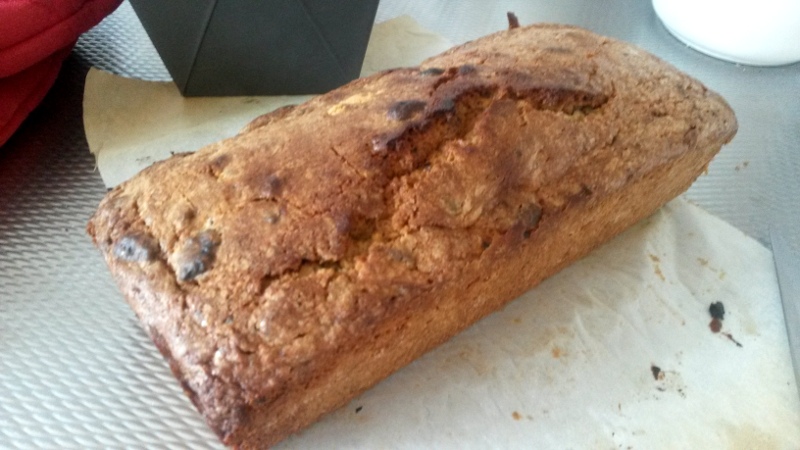 |
| Slightly scorched cake. |
 |
| Somehow one slice disappeared before I could take a picture... |
All because of the Oreos, of course!
Thursday, 4 June 2015
Garden update - in bloom!
Remember the veg patches I wrote about a while back? Well, they have gotten bigger. A lot bigger. As did all of the other stuff that we bought for our vegetable patch. Somehow you always start off with lots of small things, thinking that most of them won't take and you'll have plenty of space for those things that do grow. But then suddenly everything is growing and getting bigger and sprouting unpredicted leaves and flowers and what not, and we start dreaming about a bigger garden again...
So how are things doing? Well, of the 7 'veg patches' (aubergine, broccoli, strawberries, cherry tomatoes, thyme, spinach and endive), the thyme never really did anything, and neither did the strawberries. I don't really know what happened to the spinach or the endive, they may still be around in some of the smaller pots, but I've kind of lost track of them.
We planted the 5 proper broccoli plants out into the garden, only for them to be eaten by the ferocious slugs that prowl our garden at night. So the only things left are the aubergine and the cherry tomatoes, and they're doing really great!
(Now I took these pictures with my phone camera, which appears to be the worst camera in the history of camera phones, on a really bright day, so bear with me.)
So apart from the small supermarket veg patches we also have some other plants which we either got as small plants or which we planted out from seed from last years crop or from housewarming gifts we had a couple of years ago. The peas in the picture above came from a packet that we bought about 4 years ago, but surprisingly they still managed to become proper plants.
So this was the 'bit plot' about 3 days ago. We've had a lot of rain and even more sunshine in the days in between, so everything has grown out a lot more since then, but I didn't want to bother taking another picture. The sticks are all anti-kitty protection, because they do like to dig their holes in this area.
On the far right you can see our potato plants, which we grew from potatoes that had sprouted roots after being left out too long. Next to the potatoes are the broccoli plants. The biggest one, the one on the left, is actually the remainder of the supermarket veg patches which we grew from seed, the others were bought as small plants. In front is a small row of onions (actually lasts year's crop; they were too small to eat, so we left them in the shed and planted them out again). Behind them is a line of cucumber plants which we grew from seed, and behind those is a line of beets, also grown from seed. Then we get to beer slug, who tries to keep everything from being eaten (these things are wonderful: you fill them with beer, the slugs want to drink the beer, they fall in and drown. Much better than spreading poison. Works perfectly with pots or jars not in the shape of snails too). The courgette plant on the far left has already been savagely slaughtered, as you can see. All the way behind the beets you can see our leeks, which were bought as really small plants and are really doing well. There is a kind of empty area in front of beer slug that may or may not contain any seed, I'm not really sure what happened there.
Apart from this plot we have some smaller pots containing the aubergine and possibly the endive or spinach. We will plant these out into the ground if and when space appears, but as I mentioned before, these plants do tend to get larger and larger...
So much for vegetables, what about fruit? Well, our apple tree, after its bumper crop of last year, decided not to do anything at all. No flowers, that is, it's sprouting plenty of leaves. But there will be no home-grown apples in our future.
The strawberries on the other hand...
We're usually on holiday when the strawberry season hits, but this year we won't be going anywhere in June or July, so there will be loads of lovely strawberries to eat!
In short: our garden is in full bloom (both figuratively and literally). Even with the attacks of the snails and the extremes in weather, I think we will manage to grow some things this year, so we will be able to eat from our garden again. Which I still think is one of the best things; eating something you've grown yourself, preferable from seed. It always tastes better than store-bought stuff. And maybe next year, we'll have even more space...
So how are things doing? Well, of the 7 'veg patches' (aubergine, broccoli, strawberries, cherry tomatoes, thyme, spinach and endive), the thyme never really did anything, and neither did the strawberries. I don't really know what happened to the spinach or the endive, they may still be around in some of the smaller pots, but I've kind of lost track of them.
We planted the 5 proper broccoli plants out into the garden, only for them to be eaten by the ferocious slugs that prowl our garden at night. So the only things left are the aubergine and the cherry tomatoes, and they're doing really great!
 |
| Cherry tomatoes and peas |
So apart from the small supermarket veg patches we also have some other plants which we either got as small plants or which we planted out from seed from last years crop or from housewarming gifts we had a couple of years ago. The peas in the picture above came from a packet that we bought about 4 years ago, but surprisingly they still managed to become proper plants.
 |
| Our vegetable patch on 1 June |
On the far right you can see our potato plants, which we grew from potatoes that had sprouted roots after being left out too long. Next to the potatoes are the broccoli plants. The biggest one, the one on the left, is actually the remainder of the supermarket veg patches which we grew from seed, the others were bought as small plants. In front is a small row of onions (actually lasts year's crop; they were too small to eat, so we left them in the shed and planted them out again). Behind them is a line of cucumber plants which we grew from seed, and behind those is a line of beets, also grown from seed. Then we get to beer slug, who tries to keep everything from being eaten (these things are wonderful: you fill them with beer, the slugs want to drink the beer, they fall in and drown. Much better than spreading poison. Works perfectly with pots or jars not in the shape of snails too). The courgette plant on the far left has already been savagely slaughtered, as you can see. All the way behind the beets you can see our leeks, which were bought as really small plants and are really doing well. There is a kind of empty area in front of beer slug that may or may not contain any seed, I'm not really sure what happened there.
Apart from this plot we have some smaller pots containing the aubergine and possibly the endive or spinach. We will plant these out into the ground if and when space appears, but as I mentioned before, these plants do tend to get larger and larger...
So much for vegetables, what about fruit? Well, our apple tree, after its bumper crop of last year, decided not to do anything at all. No flowers, that is, it's sprouting plenty of leaves. But there will be no home-grown apples in our future.
The strawberries on the other hand...
 |
| ...doing better than ever! |
In short: our garden is in full bloom (both figuratively and literally). Even with the attacks of the snails and the extremes in weather, I think we will manage to grow some things this year, so we will be able to eat from our garden again. Which I still think is one of the best things; eating something you've grown yourself, preferable from seed. It always tastes better than store-bought stuff. And maybe next year, we'll have even more space...
Sunday, 31 May 2015
52 books challenge - May
So I realise that this is my 200th post and I could make something happy-peppy cheery about it, but the truth is that I haven't been writing nearly as much blog posts as I would have liked, so number 200 should have happened a long time ago. With that in mind, I'll leave a small yay here - yay! - and get down to business.
The business of reading books that is, the 52 new books I'm going to read this year (I keep remembering books that I've already read and want to read again, such as The Casual Vacancy and A Dance with Dragons and Juliet, Naked, but all of those will have to wait until 2016). The standings are as follows:
15 Waarom vuilnismannen meer verdienen dan bankiers - Rutger Bregman & Jesse Frederiks
16 Brideshead Revisited - Evelyn Waugh
17 The Narrow Road to the Deep North - Richard Flanagan
18 Funny Girl - Nick Hornby
As today is the end of week 22, I'm still 4 books behind. We'll not get into that anymore, I'll just have to catch those up at some point.
But what a combination of books to read this month! Brideshead Revisited, one of the classics I've been wanting to read ever since one of my best friends wrote her thesis on Evelyn Waugh, and I finally made it. It contained a preface by the writer himself saying that he would have done everything completely different when given the chance 15 years after finishing it, but I think it was one of the best classic novels I read in a long time - one of the easiest reads, anyway.
Then came The Narrow Road to the Deep North. Wow. I always make a point of reading the Man Booker winner (if I haven't already), and this one must have been the best in a long, loooong time. It's about the Burma railway, and the Australian POWs building that railway, and one horrible day in their lives. But it's also about Australia, and the spirit of Australia, and about love, and hate, and trauma, and about moving on, and about finding yourself in an honoured position with people saying you're a hero while you were only doing what you thought was best and don't feel all that special at all. Also, it's about the other side, about the Japanese and Korean people also working in the camps, and about their culture and sense of duty and honour, and the aftermath of WWII for them. It is so beautifully written, heart wrenching to read, and again one of those novels which everyone should read so that there will be no more wars, or prison camps, or torture.
I didn't know what to read after I finished that one, so when I came upon Funny Girl, Nick Hornby's newest novel, I was sure that had to be the one, because Mr Hornby has cheered me up in the past. Not because his books are funny in a ha-ha kind of way, they have funny lines and ironic nods, but they also give you a vision on life you don't really come across that often. Usually, they're about people in a pretty desperate situation, trying (or not trying) to get out, but in this case, the protagonist's only downside in life is that she's living in Blackpool. Which is not where she wants to be, so she goes of to London and lives through the Sixties, shedding most of her beliefs and customs from back home and turning into a TV comedy star. It is one of his most serious books to date, even though the subject matter is by far the least serious. But it is up there with some of his best.
I now once again find myself wondering what I'm going to read next, but the pile of to-read novels in my bookcase is ever growing, so I'll just finish typing this up, walk back downstairs, and see what's next. Hopefully something short, to make up for those missing 4 books...
The business of reading books that is, the 52 new books I'm going to read this year (I keep remembering books that I've already read and want to read again, such as The Casual Vacancy and A Dance with Dragons and Juliet, Naked, but all of those will have to wait until 2016). The standings are as follows:
15 Waarom vuilnismannen meer verdienen dan bankiers - Rutger Bregman & Jesse Frederiks
16 Brideshead Revisited - Evelyn Waugh
17 The Narrow Road to the Deep North - Richard Flanagan
18 Funny Girl - Nick Hornby
As today is the end of week 22, I'm still 4 books behind. We'll not get into that anymore, I'll just have to catch those up at some point.
But what a combination of books to read this month! Brideshead Revisited, one of the classics I've been wanting to read ever since one of my best friends wrote her thesis on Evelyn Waugh, and I finally made it. It contained a preface by the writer himself saying that he would have done everything completely different when given the chance 15 years after finishing it, but I think it was one of the best classic novels I read in a long time - one of the easiest reads, anyway.
Then came The Narrow Road to the Deep North. Wow. I always make a point of reading the Man Booker winner (if I haven't already), and this one must have been the best in a long, loooong time. It's about the Burma railway, and the Australian POWs building that railway, and one horrible day in their lives. But it's also about Australia, and the spirit of Australia, and about love, and hate, and trauma, and about moving on, and about finding yourself in an honoured position with people saying you're a hero while you were only doing what you thought was best and don't feel all that special at all. Also, it's about the other side, about the Japanese and Korean people also working in the camps, and about their culture and sense of duty and honour, and the aftermath of WWII for them. It is so beautifully written, heart wrenching to read, and again one of those novels which everyone should read so that there will be no more wars, or prison camps, or torture.
I didn't know what to read after I finished that one, so when I came upon Funny Girl, Nick Hornby's newest novel, I was sure that had to be the one, because Mr Hornby has cheered me up in the past. Not because his books are funny in a ha-ha kind of way, they have funny lines and ironic nods, but they also give you a vision on life you don't really come across that often. Usually, they're about people in a pretty desperate situation, trying (or not trying) to get out, but in this case, the protagonist's only downside in life is that she's living in Blackpool. Which is not where she wants to be, so she goes of to London and lives through the Sixties, shedding most of her beliefs and customs from back home and turning into a TV comedy star. It is one of his most serious books to date, even though the subject matter is by far the least serious. But it is up there with some of his best.
I now once again find myself wondering what I'm going to read next, but the pile of to-read novels in my bookcase is ever growing, so I'll just finish typing this up, walk back downstairs, and see what's next. Hopefully something short, to make up for those missing 4 books...
Saturday, 16 May 2015
Oreo cheesecake
How did I not think of this before? Oreo cheesecake; two of the best things in the world, combined!
So in Beijing, we ate a lot of Oreos. Mainly because they are the only cookies that have a somewhat reasonable price (a roll of Oreos costs about 5 Yuan, whereas other cookies, such as chocolate chip, start around 45 Yuan. Still not a lot of money, but when something is 9 times more expensive than something else, and that something else is perfectly good... the choice is easy), and of course because they're well, Oreos.
All this Oreo-eating got me thinking; I wanted to bake something new, but I don't really have the time to go proper recipe hunting, and I should be able to make it quite quickly because I didn't have enough time to do serious baking before my friend came round for tea last Thursday. So, cheesecake is the perfect solution, as you can make it one day ahead and everybody (well, most people) like it. And then I thought: why not use Oreos for the base? And so the Oreo cheesecake was born.
I've done cheesecakes before, notably the double chocolate cheesecake, so I worked from those recipes, tweaking them somewhat to meet the stuff I actually had bought.
Ingredients:
154 g crushed Oreo cookies (the amount in one packet)
75 g butter (melted)
500 g mascarpone
200 g cream cheese
100 g sugar
1 tablespoon cocoa powder
Crushing Oreo cookies is a bit of a challenge, because the slippery white stuff in the middle means you'll mostly be separating the two biscuits instead of actually breaking them, but that's fine. As long as you end up with somewhat smaller Oreo bits.
Line the bottom of your tin with baking paper. Mix your Oreo bits with the melted butter, and add to the cake tin. Leave to cool (if the next steps take a while, you can put it in the fridge at some point (never put it in the fridge straightaway - melted butter is really hot and you're fridge won't like that)).
It won't look very appetising at this point:
But it's all about the taste!
For the cream cheese mixture, mix all the rest of the ingredients together until they are light(er) and fluffy(er). I added cocoa powder to make it a bit more chocolaty, but you can leave that out or replace it with something else (vanilla, or lemon). Spoon the mixture on top of your Oreo base and leave in the fridge for at least 2 hours.
You can line the sides of your tin with more baking paper, but experience has taught me that the cheesecake mixture will only cling to the paper instead of the tin, so I usually don't bother anymore. I just use a sharp knife to separate your cheesecake from the tin, and you're good to go.
The end result is very tasty. It could be more Oreo-y, maybe you could add some Oreos to the actual cheesecake mixture, but nevertheless good. The cocoa in the mixture does make it more chocolaty, although you do need the sugar to get the sweetness back up, otherwise it'll be pretty sour and bitter.
So Oreos, not just good for eating but for baking too. Obviously, I didn't do any 'real' baking for this one, just melting, so maybe I'll work out some other Oreo recipes that do involve the use of an oven in the future. But for now, we have Oreo cheesecake goodness.
So in Beijing, we ate a lot of Oreos. Mainly because they are the only cookies that have a somewhat reasonable price (a roll of Oreos costs about 5 Yuan, whereas other cookies, such as chocolate chip, start around 45 Yuan. Still not a lot of money, but when something is 9 times more expensive than something else, and that something else is perfectly good... the choice is easy), and of course because they're well, Oreos.
All this Oreo-eating got me thinking; I wanted to bake something new, but I don't really have the time to go proper recipe hunting, and I should be able to make it quite quickly because I didn't have enough time to do serious baking before my friend came round for tea last Thursday. So, cheesecake is the perfect solution, as you can make it one day ahead and everybody (well, most people) like it. And then I thought: why not use Oreos for the base? And so the Oreo cheesecake was born.
I've done cheesecakes before, notably the double chocolate cheesecake, so I worked from those recipes, tweaking them somewhat to meet the stuff I actually had bought.
Ingredients:
154 g crushed Oreo cookies (the amount in one packet)
75 g butter (melted)
500 g mascarpone
200 g cream cheese
100 g sugar
1 tablespoon cocoa powder
Crushing Oreo cookies is a bit of a challenge, because the slippery white stuff in the middle means you'll mostly be separating the two biscuits instead of actually breaking them, but that's fine. As long as you end up with somewhat smaller Oreo bits.
Line the bottom of your tin with baking paper. Mix your Oreo bits with the melted butter, and add to the cake tin. Leave to cool (if the next steps take a while, you can put it in the fridge at some point (never put it in the fridge straightaway - melted butter is really hot and you're fridge won't like that)).
It won't look very appetising at this point:
 |
| Oreos and melted butter, hmmm. |
For the cream cheese mixture, mix all the rest of the ingredients together until they are light(er) and fluffy(er). I added cocoa powder to make it a bit more chocolaty, but you can leave that out or replace it with something else (vanilla, or lemon). Spoon the mixture on top of your Oreo base and leave in the fridge for at least 2 hours.
You can line the sides of your tin with more baking paper, but experience has taught me that the cheesecake mixture will only cling to the paper instead of the tin, so I usually don't bother anymore. I just use a sharp knife to separate your cheesecake from the tin, and you're good to go.
 |
| I'm freeee! |
 |
| It was a dark day. Chocolate to the rescue! |
The end result is very tasty. It could be more Oreo-y, maybe you could add some Oreos to the actual cheesecake mixture, but nevertheless good. The cocoa in the mixture does make it more chocolaty, although you do need the sugar to get the sweetness back up, otherwise it'll be pretty sour and bitter.
So Oreos, not just good for eating but for baking too. Obviously, I didn't do any 'real' baking for this one, just melting, so maybe I'll work out some other Oreo recipes that do involve the use of an oven in the future. But for now, we have Oreo cheesecake goodness.
Wednesday, 13 May 2015
Countries visited
When I was about 9 or 10 I decided I wanted to visit one country for each year that I lived. Which may have started because I counted all the countries I had visited so far, and it came up to exactly the age I was. Or I may have read about it in a book (think about what a great short story that would make; someone has to visit a new country for each year that they live, and what could go wrong...).
Anyway, the recent trip to China got me thinking about this again, so I decided to make a list of all the countries I have visited so far, in somewhat chronological order (I really can't tell if I visited Germany before Belgium, or Luxembourg before France... My parents may have something intelligent to say on this, but really, who cares?), to see whether my goal from two thirds of my life away still holds. I've only included countries that I actually spent at least one night in (otherwise I could include Oman or Abu Dhabi due to flight transfers, or Slovenia and Croatia as I trained through them, although that was on a sleeper train), unless they are really small countries one usually doesn't actually spend a night in (Vatican City and Andorra).
So here goes:
1 The Netherlands
2 Germany
3 Belgium
4 France
5 Luxembourg
6 England
7 Switzerland
8 Italy
9 Denmark
10 Spain
11 Egypt
12 South Africa
13 Mozambique
14 Malawi
15 Zambia
16 Kenya
17 Tanzania
18 Poland
19 Jordan
20 Sweden
21 Vatican City
22 Hungary
23 Czech Republic
24 Austria
25 Scotland
26 United States of America
27 Andorra
28 Australia
29 China
Wow, who would have thought that would fit exactly? And there may be countries I've missed: I'm not sure whether I've ever visited Monaco or San Marino, but I think this list looks pretty neat.
I still have some countries relatively close by that I really want to visit (Greece, Portugal, Norway, Ireland, Turkey), and loooots of countries further away, so I think I will try to actually keep up the 'one country a year' rule for a while. It gives me just as good an excuse as any to travel more!
Anyway, the recent trip to China got me thinking about this again, so I decided to make a list of all the countries I have visited so far, in somewhat chronological order (I really can't tell if I visited Germany before Belgium, or Luxembourg before France... My parents may have something intelligent to say on this, but really, who cares?), to see whether my goal from two thirds of my life away still holds. I've only included countries that I actually spent at least one night in (otherwise I could include Oman or Abu Dhabi due to flight transfers, or Slovenia and Croatia as I trained through them, although that was on a sleeper train), unless they are really small countries one usually doesn't actually spend a night in (Vatican City and Andorra).
So here goes:
1 The Netherlands
2 Germany
3 Belgium
4 France
5 Luxembourg
6 England
7 Switzerland
8 Italy
9 Denmark
10 Spain
11 Egypt
12 South Africa
13 Mozambique
14 Malawi
15 Zambia
16 Kenya
17 Tanzania
18 Poland
19 Jordan
20 Sweden
21 Vatican City
22 Hungary
23 Czech Republic
24 Austria
25 Scotland
26 United States of America
27 Andorra
28 Australia
29 China
Wow, who would have thought that would fit exactly? And there may be countries I've missed: I'm not sure whether I've ever visited Monaco or San Marino, but I think this list looks pretty neat.
I still have some countries relatively close by that I really want to visit (Greece, Portugal, Norway, Ireland, Turkey), and loooots of countries further away, so I think I will try to actually keep up the 'one country a year' rule for a while. It gives me just as good an excuse as any to travel more!
Friday, 8 May 2015
China travels
So we've just returned from our trip to Beijing, China. Where we spent only one week, which several people called 'decadent', and which isn't nearly long enough to see all the sights, but it was everything we could manage with our limited off-days and busy jobs and stuff (the upside is that the busy jobs make us able to actually pay for the trip to China, so it does feel like a good balance).
Anyway, one of my friends from university decided about a year ago that she wanted to teach English in a Chinese high school instead of a Dutch one, so off she went to Beijing, where she teaches the lucky few in the special 'international program' how people think and work and study in the rest of the world. All of this to prepare them for their studies at Yale or Oxford or Harvard or Cambridge, because that's where most of them end up (although most of them also fail quite quickly and go back to China, because just 2 years in an 'international program' won't really prepare you for the culture shock). But as soon as she decided to live in China for a year, we decided to come and visit her.
I'd never been to the 'real' Asia before; I visited Jordan in 2007 but that's more the Middle East than Asia. My boyfriend had already travelled extensively in Vietnam, China, and Malaysia, so he was probably more prepared. Although there wasn't that much to prepare us for; Beijing is a lot like any other big city around the world, only with a lot more smog. Otherwise; congested streets, great metro system (really, the best I've ever been on), lots of international restaurants, supermarkets, shops, etc. Lots of tourist attractions, although not always in the shape one would expect. And, even more unexpectedly, it's also a very green city; the Chinese love their plants, both flowers and trees, and there are some nice parks.
My friend lives in one of the typical Chinese apartment buildings, with oddities such as a refrigerator on the balcony and showering over the toilet, so we got the real local resident experience. She had the first three days of our visit off, so she could show us the sights and explain some Chinese customs and words to us, which was nice because most of them don't speak any English except for 'bye-bye'. But we managed anyway, because smiles, hands and feet, and a friendly tone will get you by almost anywhere in the world.
So what did we see? More temples than I could ever have imagined in a country that went through a Cultural Revolution and doesn't really like religion all that much. But there are lots of beautiful Buddhist temples around, the biggest and most impressive of which was the Tibetan Lama Temple quite close to my friend's house. Apart from billowing clouds of incense and lots of worshippers it contains a 27 meter high Buddha statue, the finest we saw in the whole country. We visited some other Buddhist temples, some newer and some older, but this was by far the best.
Then there was the Temple of Heaven, which was visited by the emperors to pray for good harvests. This isn't so much a Buddhist temple as a general heaven-worship temple, it also has something to do with fung shui (there used to be temples of the earth, fire and water as well), but the whole picture never really clear. These were really nice round temples with lots of numerological detail, which was nice after seeing all the other square temples. Also lots of guardian animals on the roofs, which is probably my favourite thing about these temples (we used to call the figure in front 'guy on a chicken' before we found out it's supposed to be a phoenix). The Temple of Heaven is situated in the Temple of Heaven Park, one of the many parks dotted around the city (sadly, no sitting on the grass, only on benches).
Of course we also visited the Forbidden City and Summer Palace, playgrounds of the former emperors. The Chinese call the Forbidden City the 'Palace Museum' and have put little shops and toilets and everything in all the buildings, but they're still standing and great to see. We loved the nine-dragon screen, of which only a few are left (we saw the one in Beihai Park, too). But mostly it's biiiig, way bigger than you'd think, with more than 800 buildings and huge squares that could fit thousands of people.
The same is true of 'the' square, Tian'anmen Square, to the south of the Forbidden City. This was one of the most stressful experiences I've ever had in a touristy place, with loads of jumpy policemen and military standing around, and very detailed security checks to get there (apart from the regular bag searches, you had to show your identity card, and there was some not-friendly frisking going on, especially of elderly Chinese ladies. As usual, we could walk straight through). There was some disturbance when someone threw a lot of leaflets into the crowd, with the stressed-out policemen shouting and pointing and running as if it were hand grenades rather than leaflets. On the lighter side, there were lots of Chinese tourists (also at the Summer Palace and Forbidden City), many of whom wanted to take pictures of us, because they're from tiny villages and we're weird Western tourists. Different people took different approaches to sneaking a picture, with some of them outright asking us to take a picture with them.
And last but certainly not least, we visited the Great Wall of China. This took some organising to get there, as we had to take two buses out of town, the first of which got stuck in a massive traffic jam and the second of which we couldn't find, so we took a black cab to the wall and arrived there about 4.5 hours after we set off. But it was well worth it, as we visited an unrestored section of the Wall, with all its crumbling beauty and very few other tourists. We had a great walk, and then a great bus ride back, again getting stuck in traffic and spending a total of 9 hours on buses (this was the day after we spent 9 hours on a plane, so you can imagine the state our legs and backs were in by that time - Chinese buses don't really accommodate people over 1.80 m). But again; it was more than worth it.
Beforehand I thought food might become a problem as I'm a vegetarian and allergic to lots of other stuff, but it was a breeze. We had some dinners in Western restaurants and some in Chinese restaurants, including a hotpot 'fastfood' restaurant and two vegetarian 'mock meat' restaurants (close to Buddhist temples, of course). My boyfriend didn't get to eat the much-anticipated Peking Duck, so we'll have to go back for that some day. There are some other things we didn't get around to doing as well, but then my friend is somewhat thinking about staying another year, so we may visit her again. Or we'll take a larger Asia trip one day, as this one has warmed me to that part of the world, which I didn't really know that much about. All in all, it was a great trip, and if you're unsure where your next city trip should be to, put Beijing on the list!
Anyway, one of my friends from university decided about a year ago that she wanted to teach English in a Chinese high school instead of a Dutch one, so off she went to Beijing, where she teaches the lucky few in the special 'international program' how people think and work and study in the rest of the world. All of this to prepare them for their studies at Yale or Oxford or Harvard or Cambridge, because that's where most of them end up (although most of them also fail quite quickly and go back to China, because just 2 years in an 'international program' won't really prepare you for the culture shock). But as soon as she decided to live in China for a year, we decided to come and visit her.
I'd never been to the 'real' Asia before; I visited Jordan in 2007 but that's more the Middle East than Asia. My boyfriend had already travelled extensively in Vietnam, China, and Malaysia, so he was probably more prepared. Although there wasn't that much to prepare us for; Beijing is a lot like any other big city around the world, only with a lot more smog. Otherwise; congested streets, great metro system (really, the best I've ever been on), lots of international restaurants, supermarkets, shops, etc. Lots of tourist attractions, although not always in the shape one would expect. And, even more unexpectedly, it's also a very green city; the Chinese love their plants, both flowers and trees, and there are some nice parks.
My friend lives in one of the typical Chinese apartment buildings, with oddities such as a refrigerator on the balcony and showering over the toilet, so we got the real local resident experience. She had the first three days of our visit off, so she could show us the sights and explain some Chinese customs and words to us, which was nice because most of them don't speak any English except for 'bye-bye'. But we managed anyway, because smiles, hands and feet, and a friendly tone will get you by almost anywhere in the world.
So what did we see? More temples than I could ever have imagined in a country that went through a Cultural Revolution and doesn't really like religion all that much. But there are lots of beautiful Buddhist temples around, the biggest and most impressive of which was the Tibetan Lama Temple quite close to my friend's house. Apart from billowing clouds of incense and lots of worshippers it contains a 27 meter high Buddha statue, the finest we saw in the whole country. We visited some other Buddhist temples, some newer and some older, but this was by far the best.
Then there was the Temple of Heaven, which was visited by the emperors to pray for good harvests. This isn't so much a Buddhist temple as a general heaven-worship temple, it also has something to do with fung shui (there used to be temples of the earth, fire and water as well), but the whole picture never really clear. These were really nice round temples with lots of numerological detail, which was nice after seeing all the other square temples. Also lots of guardian animals on the roofs, which is probably my favourite thing about these temples (we used to call the figure in front 'guy on a chicken' before we found out it's supposed to be a phoenix). The Temple of Heaven is situated in the Temple of Heaven Park, one of the many parks dotted around the city (sadly, no sitting on the grass, only on benches).
Of course we also visited the Forbidden City and Summer Palace, playgrounds of the former emperors. The Chinese call the Forbidden City the 'Palace Museum' and have put little shops and toilets and everything in all the buildings, but they're still standing and great to see. We loved the nine-dragon screen, of which only a few are left (we saw the one in Beihai Park, too). But mostly it's biiiig, way bigger than you'd think, with more than 800 buildings and huge squares that could fit thousands of people.
The same is true of 'the' square, Tian'anmen Square, to the south of the Forbidden City. This was one of the most stressful experiences I've ever had in a touristy place, with loads of jumpy policemen and military standing around, and very detailed security checks to get there (apart from the regular bag searches, you had to show your identity card, and there was some not-friendly frisking going on, especially of elderly Chinese ladies. As usual, we could walk straight through). There was some disturbance when someone threw a lot of leaflets into the crowd, with the stressed-out policemen shouting and pointing and running as if it were hand grenades rather than leaflets. On the lighter side, there were lots of Chinese tourists (also at the Summer Palace and Forbidden City), many of whom wanted to take pictures of us, because they're from tiny villages and we're weird Western tourists. Different people took different approaches to sneaking a picture, with some of them outright asking us to take a picture with them.
And last but certainly not least, we visited the Great Wall of China. This took some organising to get there, as we had to take two buses out of town, the first of which got stuck in a massive traffic jam and the second of which we couldn't find, so we took a black cab to the wall and arrived there about 4.5 hours after we set off. But it was well worth it, as we visited an unrestored section of the Wall, with all its crumbling beauty and very few other tourists. We had a great walk, and then a great bus ride back, again getting stuck in traffic and spending a total of 9 hours on buses (this was the day after we spent 9 hours on a plane, so you can imagine the state our legs and backs were in by that time - Chinese buses don't really accommodate people over 1.80 m). But again; it was more than worth it.
Beforehand I thought food might become a problem as I'm a vegetarian and allergic to lots of other stuff, but it was a breeze. We had some dinners in Western restaurants and some in Chinese restaurants, including a hotpot 'fastfood' restaurant and two vegetarian 'mock meat' restaurants (close to Buddhist temples, of course). My boyfriend didn't get to eat the much-anticipated Peking Duck, so we'll have to go back for that some day. There are some other things we didn't get around to doing as well, but then my friend is somewhat thinking about staying another year, so we may visit her again. Or we'll take a larger Asia trip one day, as this one has warmed me to that part of the world, which I didn't really know that much about. All in all, it was a great trip, and if you're unsure where your next city trip should be to, put Beijing on the list!
Wednesday, 29 April 2015
52 books challenge - April
So I'm writing my reading progress for April one day early, because I don't think I will be finishing another novel tomorrow, with the travelling to China and the panicking about the travelling to China and all (more about travelling to China in a post to come!). So this is my score as of week 18:
11 The Spy Who Came in From the Cold - John le Carre
12 Slaughterhouse 5 - Kurt Vonnegut
13 De Ontdekking van de Hemel (The Discovery of Heaven) - Harry Mulisch
14 The Beautifull Cassandra - Jane Austen
Which means I'm still 4 books behind, but I haven't gotten more behind, which is good. Also, I fiiiiinally finished reading The Discovery of Heaven, which took me about 2 months. This is one of the real 'classics' of Dutch literature, and most people become very pretentious when talking about it, especially when they managed to get through it at an early age (it's on a lot of secondary school reading lists). I can't say I really cared for it; I liked the first part and the last part, but the middle two parts could have done with a LOT of editing. Hardly any character development, but lots of pointless side characters not really doing anything or going anywhere. Also, Mr Mulisch is very fond of killing off characters quite abruptly and for no apparent reason, which I couldn't really appreciate. The whole plot ties up nicely at the end, but I just wish we could have gotten there a bit faster.
But with that huge tome out of the way, I think I will be reading more and faster from now on. I'm halfway through Brideshead Revisited, but I also have some newer novels lined up, which I generally read faster. Also, there is the plane flight to and from China to give a lot of reading time (more about China later). So I have enough excuses to see myself getting to at least 20 novels in the next month. We'll see how that went at the end of May.
11 The Spy Who Came in From the Cold - John le Carre
12 Slaughterhouse 5 - Kurt Vonnegut
13 De Ontdekking van de Hemel (The Discovery of Heaven) - Harry Mulisch
14 The Beautifull Cassandra - Jane Austen
Which means I'm still 4 books behind, but I haven't gotten more behind, which is good. Also, I fiiiiinally finished reading The Discovery of Heaven, which took me about 2 months. This is one of the real 'classics' of Dutch literature, and most people become very pretentious when talking about it, especially when they managed to get through it at an early age (it's on a lot of secondary school reading lists). I can't say I really cared for it; I liked the first part and the last part, but the middle two parts could have done with a LOT of editing. Hardly any character development, but lots of pointless side characters not really doing anything or going anywhere. Also, Mr Mulisch is very fond of killing off characters quite abruptly and for no apparent reason, which I couldn't really appreciate. The whole plot ties up nicely at the end, but I just wish we could have gotten there a bit faster.
But with that huge tome out of the way, I think I will be reading more and faster from now on. I'm halfway through Brideshead Revisited, but I also have some newer novels lined up, which I generally read faster. Also, there is the plane flight to and from China to give a lot of reading time (more about China later). So I have enough excuses to see myself getting to at least 20 novels in the next month. We'll see how that went at the end of May.
Subscribe to:
Posts (Atom)